Bridging Families at Davis City Hall

Bridging Families at Davis City Hall

Reimagining the family experience at town city hall, through field research, interviews, and prototype testing with town residents

Reimagining the family experience at town city hall, through field research, interviews, and prototype testing with town residents

Role

Role

Human-Centered Researcher

Methods

Methods

Field Research, Prototype Testing, Experience Design

Field Research, Prototype Testing, Experience Design

Team

Team

4 Researchers

4 Researchers

Timeline

Timeline

January 2025 - March 2025

OVERVIEW

OVERVIEW

Context

Context

This case study addresses a project I did for my Human-Centered Design class at the University of California, Davis. Our assignment for the Winter Quarter was to use the Human-Centered Design process in order to understand how we could redesign the interior hallway of Davis City Hall.

This case study addresses a project I did for my Human-Centered Design class at the University of California, Davis. Our assignment for the Winter Quarter was to use the Human-Centered Design process in order to understand how we could redesign the interior hallway of Davis City Hall.

Davis City Hall is a place where residents go to do administrative work. Many residents visit, from business contractors, to families with children. Our goal was to reinvigorate City Hall to better reflect the values of the city and its residents.

Davis City Hall is a place where residents go to do administrative work. Many residents visit, from business contractors, to families with children. Our goal was to reinvigorate City Hall to better reflect the values of the city and its residents.

Impact

Impact

We conducted field research with multiple Davis town residents, designed and tested a prototype based on the research findings, and presented a final slide deck with recommendations directly to Davis City Hall staff.

We conducted field research with multiple Davis town residents, designed and tested a prototype based on the research findings, and presented a final slide deck with recommendations directly to Davis City Hall staff.

I led interview scheduling and led synthesis (empathy mapping and insight development), and collaborated with my teammates to design the early stage prototype and test with Davis residents.

I led interview scheduling and led synthesis (empathy mapping and insight development), and collaborated with my teammates to design the early stage prototype and test with Davis residents.

IN-PERSON VISIT

IN-PERSON VISIT

Before talking to a single resident, we walked through Davis City Hall ourselves to observe the space firsthand such as what it looked like, what it communicated, and what was (and wasn’t) there for the people passing through it.

Before talking to a single resident, we walked through Davis City Hall ourselves to observe the space firsthand such as what it looked like, what it communicated, and what was (and wasn’t) there for the people passing through it.

We noticed a building that was administratively functional but emotionally flat: community bulletin boards buried in a side hallway, stained-glass art that went unnoticed, and a lobby that felt more like a waiting area than a civic space.
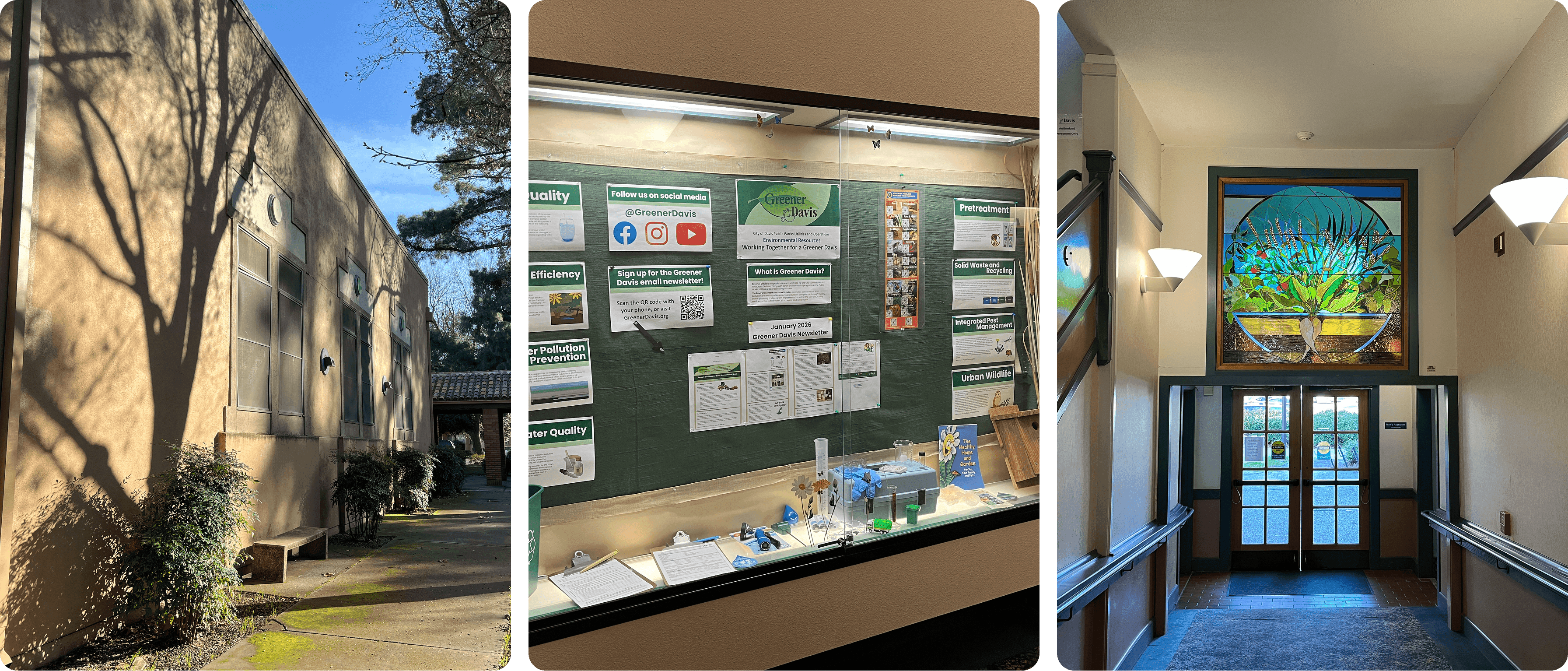
We noticed a building that was administratively functional but emotionally flat: community bulletin boards buried in a side hallway, stained-glass art that went unnoticed, and a lobby that felt more like a waiting area than a civic space.

Why This Mattered

Why This Mattered

Starting with observation of the actual hallway meant our questions were grounded in the actual physical space rather than in guesses about it. It also gave us shared context as a team before we had any conversations with residents.

Starting with observation of the actual hallway meant our questions were grounded in the actual physical space rather than in guesses about it. It also gave us shared context as a team before we had any conversations with residents.

RESIDENT INTERVIEWS

RESIDENT INTERVIEWS

Approach

Approach

We interviewed 7 Davis residents, 5 long-term residents and 2 graduate students in the age range of 26-70, to understand how families and community members experience Davis City Hall, and where the current space falls short of the community’s values.

We interviewed 7 Davis residents, 5 long-term residents and 2 graduate students in the age range of 26-70, to understand how families and community members experience Davis City Hall, and where the current space falls short of the community’s values.

Persona

Persona

We decided to base our audience persona on Anh (psuedonym to protect resident privacy), a 64-year-old retired teacher and community volunteer who has lived in Davis for more than 20 years.

We decided to base our audience persona on Anh (psuedonym to protect resident privacy), a 64-year-old retired teacher and community volunteer who has lived in Davis for more than 20 years.

  • Why she visits: Monthly paperwork and payments

  • What she wants: A City Hall that doubles as a space for families to spend time together, not just process errands

  • Why she visits: Monthly paperwork and payments

  • What she wants: A City Hall that doubles as a space for families to spend time together, not just process errands

QUOTE 1

QUOTE 1

“The only nice thing is the people.”

“The only nice thing is the people.”

QUOTE 2

QUOTE 2

“There isn’t anything to do while they [kids] wait.”

“There isn’t anything to do while they [kids] wait.”

QUOTE 3

QUOTE 3

“No social warmth.”

“No social warmth.”

Synthesis

Synthesis

We synthesized interview data into an empathy map to pressure-test what we were hearing before jumping to solutions. The pattern that emerged: families come to City Hall out of obligation, not choice, and there’s nothing built for the time they’re forced to spend there. This synthesis sharpened into our design question.

We synthesized interview data into an empathy map to pressure-test what we were hearing before jumping to solutions. The pattern that emerged: families come to City Hall out of obligation, not choice, and there’s nothing built for the time they’re forced to spend there. This synthesis sharpened into our design question.

How might we redesign the City Hall entrance hallway so families feel they belong, turning a routined visit into a shared memory that builds civic pride?
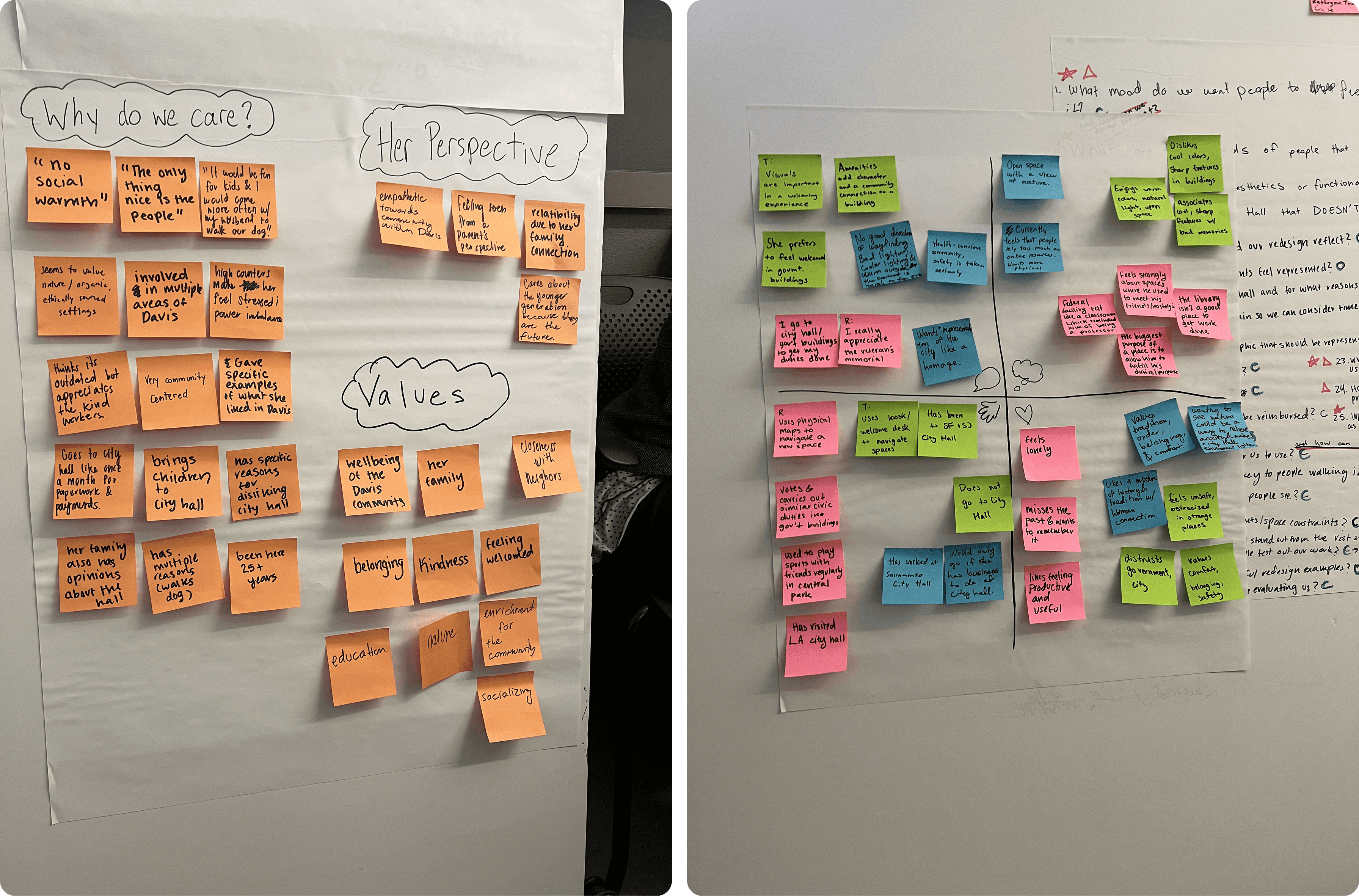
How might we redesign the City Hall entrance hallway so families feel they belong, turning a routined visit into a shared memory that builds civic pride?

PROTOTYPING

PROTOTYPING

We ideated three directions before choosing one to build into a real-life prototype.

We ideated three directions before choosing one to build into a real-life prototype.

Concept

Concept

Reasoning

Reasoning

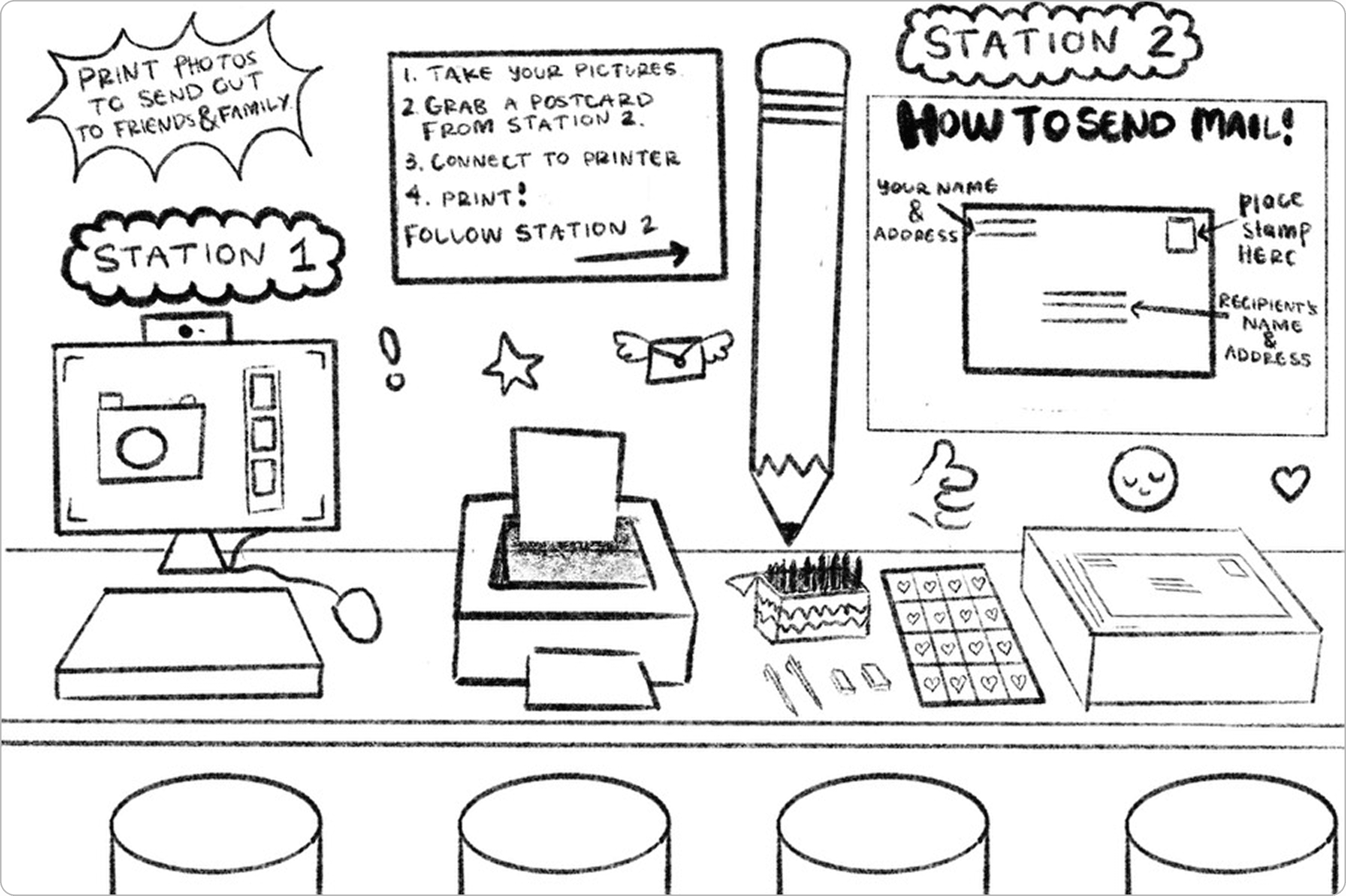
Computer Corner

Computer Corner

Addressed waiting time, but didn’t answer the “no social warmth” insight

Addressed waiting time, but didn’t answer the “no social warmth” insight

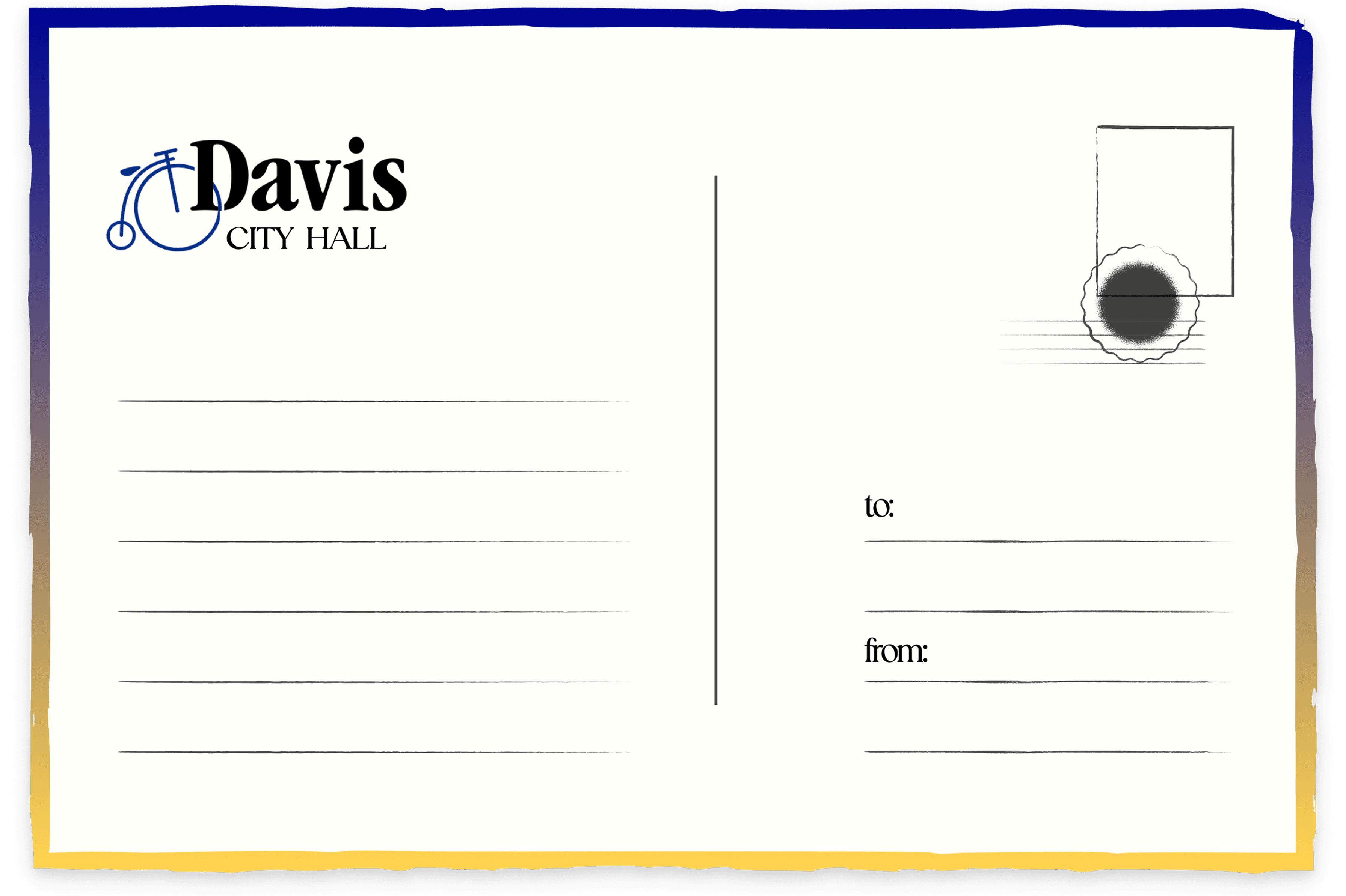
Postcard Station

Postcard Station

Created a keepsake, but required writing and didn’t invite group interaction

Created a keepsake, but required writing and didn’t invite group interaction

Photobooth (selected)

Photobooth (selected)

Low-cost, invited multiple family members to participate together, produced a shareable memory on the spot

Low-cost, invited multiple family members to participate together, produced a shareable memory on the spot

Final Prototype

Final Prototype

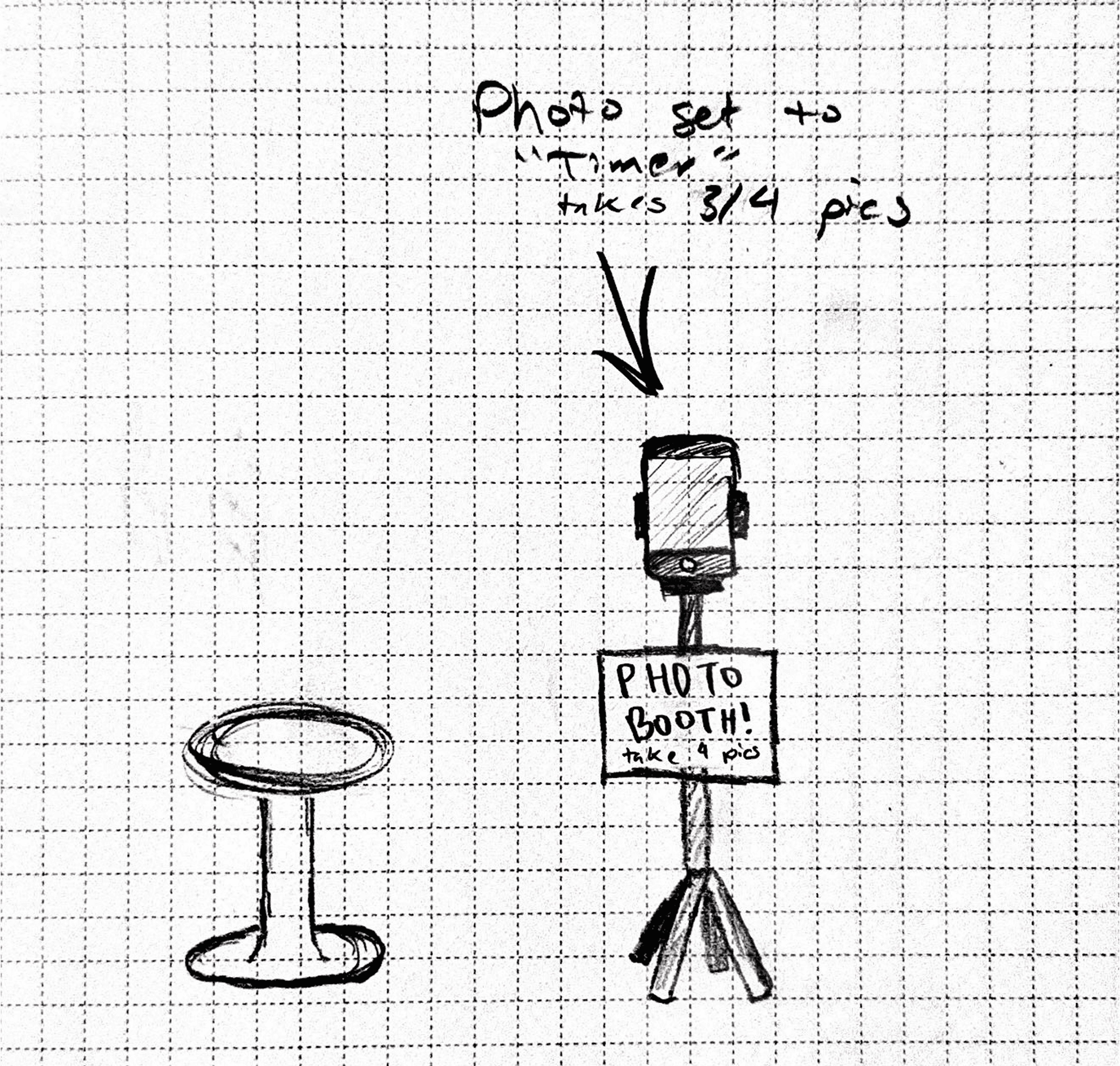
We built a photobooth kit with handmade props designed to be quick enough to set up and test around town.
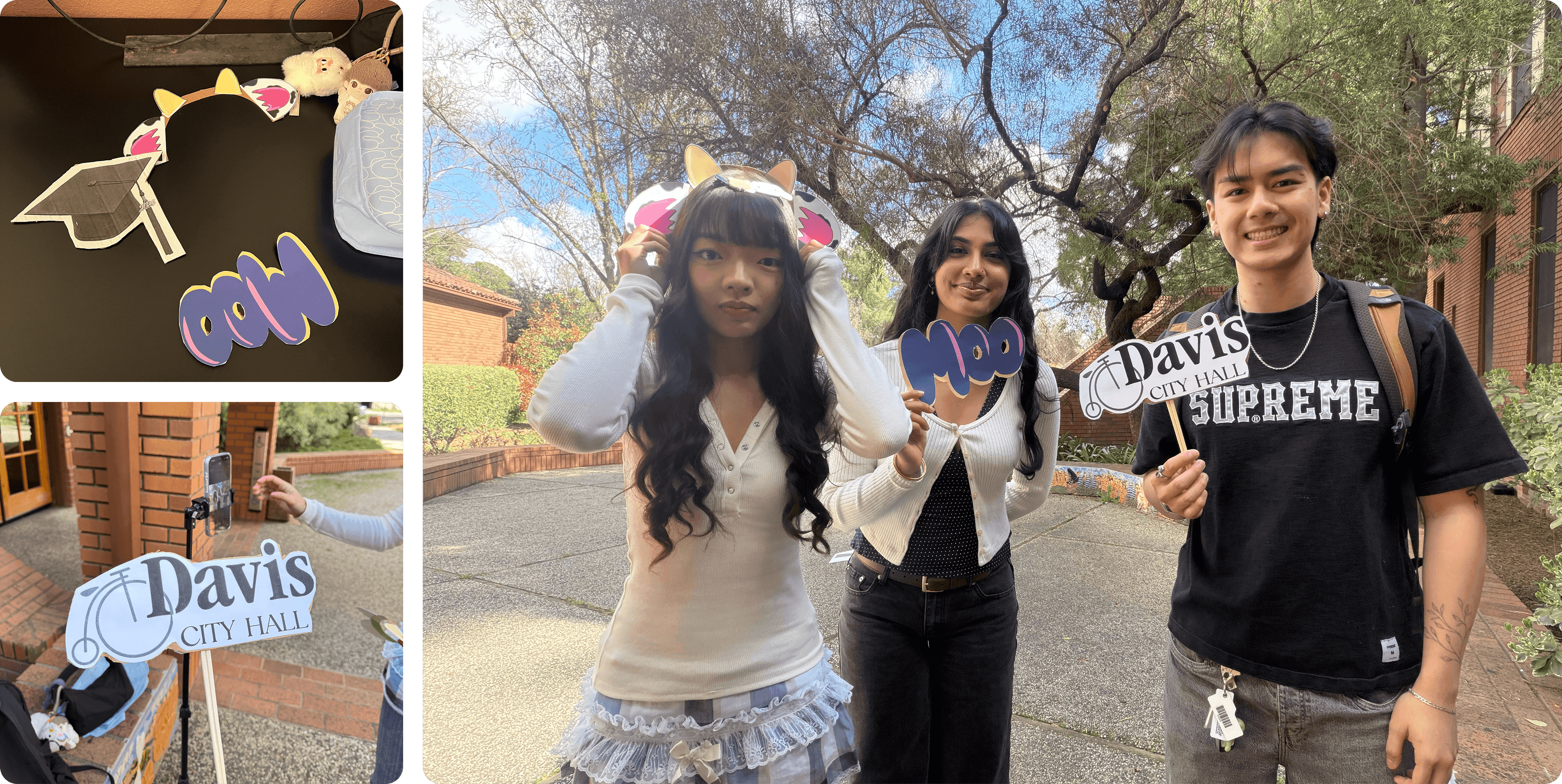
We built a photobooth kit with handmade props designed to be quick enough to set up and test around town.

TESTING & RESULTS

TESTING & RESULTS

We tested the prototype with 8 groups in the field. Our participants were a mix of families, friends, and individuals and we approached them and invited them to take a keepsake photo with our props.

We tested the prototype with 8 groups in the field. Our participants were a mix of families, friends, and individuals and we approached them and invited them to take a keepsake photo with our props.

Results

Results

We had three main findings from our prototype test.

We had three main findings from our prototype test.

Families responded enthusiastically and readily opted in

Families responded enthusiastically and readily opted in

Individuals were noticeably more reluctant to participate alone

Individuals were noticeably more reluctant to participate alone

One group stated “families are always looking for more photo opportunities”

One group stated “families are always looking for more photo opportunities”

PROJECT OUTCOMES

PROJECT OUTCOMES

We presented this project at city hall directly to city hall directors and the rest of our cohort. We included insights and next steps so that directors could move forward with implementation and improve the experience for families.

We presented this project at city hall directly to city hall directors and the rest of our cohort. We included insights and next steps so that directors could move forward with implementation and improve the experience for families.

What We Learned

What We Learned

  • Families in Davis are actively looking for activities that create shared memories, not just faster paperwork

  • Community is a core value residents associate with Davis and they want City Hall to reflect that, not just administer it

  • Families in Davis are actively looking for activities that create shared memories, not just faster paperwork

  • Community is a core value residents associate with Davis and they want City Hall to reflect that, not just administer it

Next Steps We Identified

Next Steps We Identified

  • Refine the prototype based on broader testing

  • Design a wider set of City Hall–themed props to keep the experience fresh for repeat visitors

  • Refine the prototype based on broader testing

  • Design a wider set of City Hall–themed props to keep the experience fresh for repeat visitors

REFLECTION

REFLECTION

This project was my first introduction to the Human-Centered Design process and conducting field work face-to-face. Up until this class, I was only familiar with working on software solutions and conducting research with users online. Now,I was cold-approaching strangers outside a municipal building, asking if they’d be willing to talk to us or pose for a photo, with no recruiting screener or scheduled call to fall back on. I had to read a room in real time instead of a transcript afterward, and get comfortable with people saying no on the spot.

This project was my first introduction to the Human-Centered Design process and conducting field work face-to-face. Up until this class, I was only familiar with working on software solutions and conducting research with users online. Now,I was cold-approaching strangers outside a municipal building, asking if they’d be willing to talk to us or pose for a photo, with no recruiting screener or scheduled call to fall back on. I had to read a room in real time instead of a transcript afterward, and get comfortable with people saying no on the spot.

With more time, I’d want a larger and more demographically varied sample (our 7 interviews skewed toward long-term residents), and I’d want to test a mounted, always-available photo station rather than a researcher-led intercept, to see whether the effect holds without our presence prompting participation.

With more time, I’d want a larger and more demographically varied sample (our 7 interviews skewed toward long-term residents), and I’d want to test a mounted, always-available photo station rather than a researcher-led intercept, to see whether the effect holds without our presence prompting participation.

Let’s Connect.

© 2026 Deepa Bhat. All Rights Reserved

Thanks for stopping by!

Let’s Connect.

© 2026 Deepa Bhat. All Rights Reserved

Thanks for stopping by!

Let’s Connect.

© 2026 Deepa Bhat. All Rights Reserved

Thanks for stopping by!